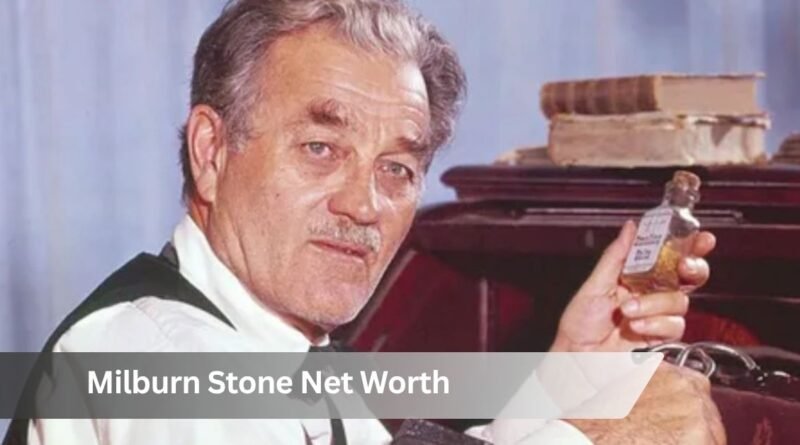
Milburn Stone Net Worth: What Gunsmoke’s Doc Adams Was Really Worth
Milburn Stone had an estimated net worth of about $600,000 when he died in June 1980. Adjusted for inflation, that is roughly $2.4 million in 2026 money. It is a comfortable sum, but it is nowhere near what you might expect from a man who spent two decades on the most successful Western in television history.
The gap between those two things is the interesting part. Stone played Doc Adams on Gunsmoke for the show’s entire 20-year run and appeared in 604 episodes. He won an Emmy. He had a star on the Hollywood Walk of Fame. And he still left an estate that a mid-level executive today would recognise.
Here is where the money came from, where it went, and the one decision in 1961 that shaped everything after it.
What was Milburn Stone’s net worth?
About $600,000 at the time of his death on 12 June 1980, at age 75. That is the figure that appears most consistently across biographical and celebrity wealth records.
You will see other numbers, ranging from $300,000 up to $2 million. There is a simple reason for the spread. Actors of Stone’s generation were not required to publish their finances, and estate records from 1980 were never compiled into any public database. Nobody audited a character actor’s bank balance in the way that financial reporting now tracks modern stars. The $600,000 estimate is the one with the most weight behind it, but it remains an estimate.
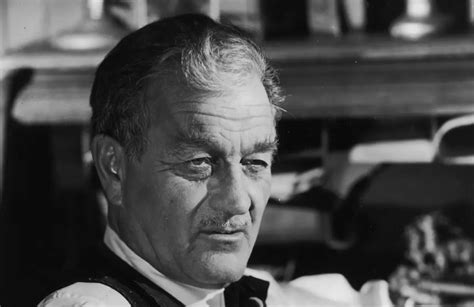
Put in today’s terms, $600,000 in 1980 buys about the same as $2.4 million now. Prices are roughly four times higher than they were then, so his money went considerably further than the raw number suggests.
| Figure | Amount | What it means |
| Net worth at death (1980) | ~$600,000 | The most consistently cited estimate |
| Same amount in 2026 dollars | ~$2.4 million | Adjusted using consumer price data |
| 1961 residual rights sale | $100,000 | A one-off payment from CBS |
| That $100,000 in 2026 dollars | ~$1.1 million | Large then, small against 50 years of reruns |
Who was Milburn Stone?
Hugh Milburn Stone was born on 5 July 1904 in Burrton, Kansas, to Herbert Stone and Laura Belfield. He grew up in a small farming town about 160 miles from Dodge City, the place he would later spend twenty years pretending to live in.
Acting ran in the family. His uncle was Fred Stone, a well-known Broadway comedian, and his first cousin was the character actress Madge Blake. Stone had a congressional appointment to the United States Naval Academy and turned it down to join a stock theatre company instead. His father had wanted him to become a doctor, which is a detail worth holding on to.
He first stepped on stage in a Kansas tent show in 1919, when he was 15. Through the late 1920s he worked vaudeville, and by 1930 he was half of a song and dance act called Stone and Strain. He made Broadway in Jayhawker in 1934 and Around the Corner in 1936, then moved to Los Angeles to try films.
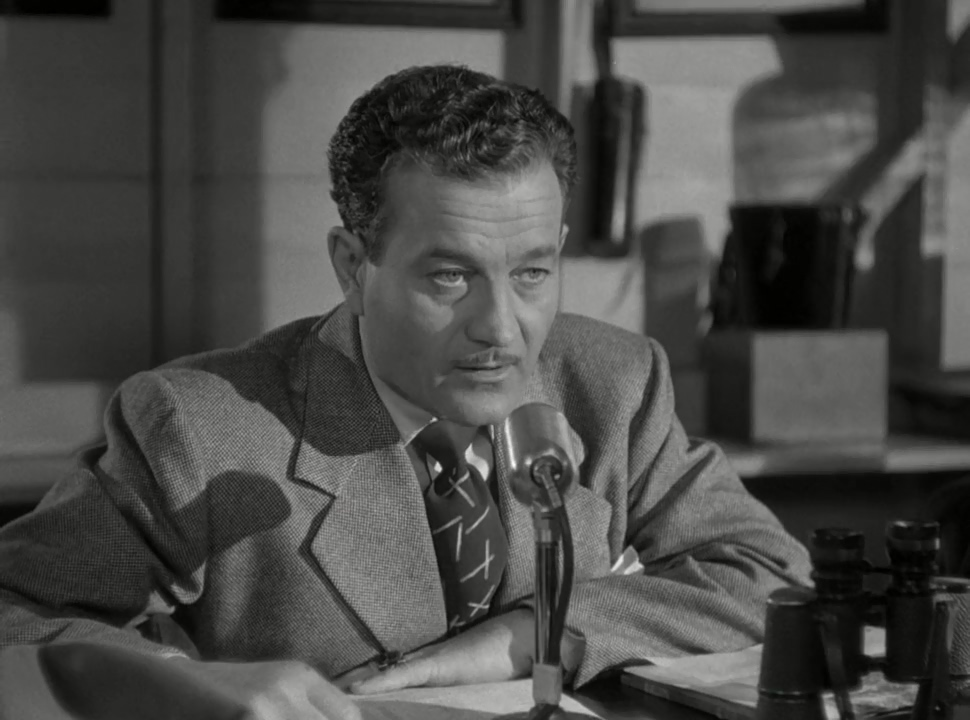
What followed was twenty years of steady, unglamorous work. He appeared in well over a hundred films, most of them small parts, many uncredited. Scroll his filmography from the mid-1930s and the pattern is obvious: Reporter, Salesman, Sailor, Telegraph Desk Clerk, Radio Operator, Henchman. Whole years pass without a named character. In 1936 alone he turned up in a dozen pictures and was credited in barely any of them.
The bigger parts came slowly. He played Stephen A. Douglas in Young Mr. Lincoln alongside Henry Fonda in 1939, co-starred with Roy Rogers in Colorado in 1940 as the brother gone wrong, and signed with Universal in 1943, which brought him Captive Wild Woman, Sherlock Holmes Faces Death, and a lead as the hero of the 1944 serial The Great Alaskan Mystery. Later came Pickup on South Street in 1953 and Arrowhead the same year, where he played sidekick to Charlton Heston.
It was reliable work. It was not the kind that builds wealth. A character actor in the studio era was paid by the picture or by the week, and when the picture wrapped, the money stopped. By the mid-1950s Stone was past fifty with two decades of credits and no financial security to show for them.
How Milburn Stone made his money
Almost all of it came from Gunsmoke. Before 1955 he was a working character actor earning working character actor money, and after 1975 he was retired.
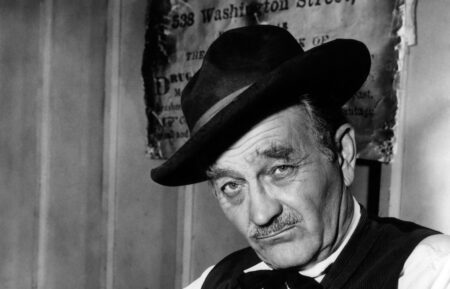
The radio version of Gunsmoke had been a hit for CBS since 1952, and when the network moved it to television it recast every part. Howard McNear, who voiced Doc Adams on radio and later played Floyd the barber on The Andy Griffith Show, was replaced by Stone, who gave the character a rougher edge. He was 51 and had never had a steady paycheque in his life.
He then held that job for twenty years. Gunsmoke ran from 1955 to 1975 and remains the longest-running Western in American television history. Stone missed only seven episodes in the whole run, in 1971, when he needed heart bypass surgery and Pat Hingle stepped in as a different doctor. He returned and stayed until the show was cancelled.
That kind of continuity is what built his money. Not a spectacular salary, but a reliable one, arriving every week for two decades while the show sat near the top of the ratings. He took the role seriously enough that he based his portrayal on Joseph Wakefield Myers, the doctor of his hometown from 1913 to 1928, and he was known on set for insisting on medical accuracy. The father who wanted a physician got one, in a way.
Stone’s wealth came from one long job, not from many big ones. That is the single most important thing to understand about his finances.
The 1961 deal that cost him a fortune
In 1961, Milburn Stone sold his Gunsmoke residual rights back to CBS for a lump sum of $100,000. Amanda Blake, who played Miss Kitty, made the same deal in the same year for the same amount.
At the time it looked sensible. A hundred thousand dollars in 1961 was a serious amount of money, enough to buy several houses outright. Reruns existed, but nobody in 1961 could have known what syndication would become. Gunsmoke was six years into its run with fourteen more to go, and television as an industry was still working out how much old episodes were worth.
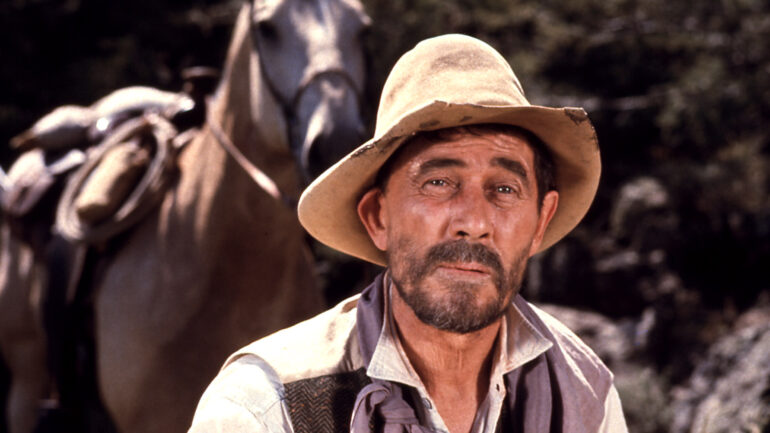
Then the show ran for another fourteen years, ended as a 635-episode library, and went into syndication that has never really stopped. Gunsmoke reruns aired continuously across American television for decades and still turn up on cable and streaming services today. Every one of those airings generated money that Stone had already signed away in a single transaction.
There is no way to put a firm number on what those residuals would have been worth. But a 635-episode Western in constant rotation for fifty years is one of the most valuable back catalogues in American television, and Stone traded his share of it for the equivalent of about $1.1 million in today’s money. It is the clearest answer to why a man who was on screen for twenty years left $600,000 rather than $6 million.
It is worth being fair to the man who signed it. 1961 was a wobbly year for the show. Gunsmoke had been the number one programme in America for four straight seasons, and that autumn it doubled its running time from a half hour to a full hour and immediately slipped out of the top spot. Stone was 57, with a career of uncredited bit parts behind him and a show that had just changed shape underneath him.
Against that, a guaranteed hundred thousand dollars in hand looked like the sensible half of the trade. Nobody offering an actor a buyout in 1961 was doing him a favour, but nobody in the room could price the alternative either. The decision only looks bad in hindsight, and hindsight had fifty years of reruns to work with that Stone did not.
Why $600,000 sounds small for a 20-year TV star
Because television paid differently then, and because the money mostly stopped when the work stopped.
Three things separate Stone’s era from the one we are used to now.
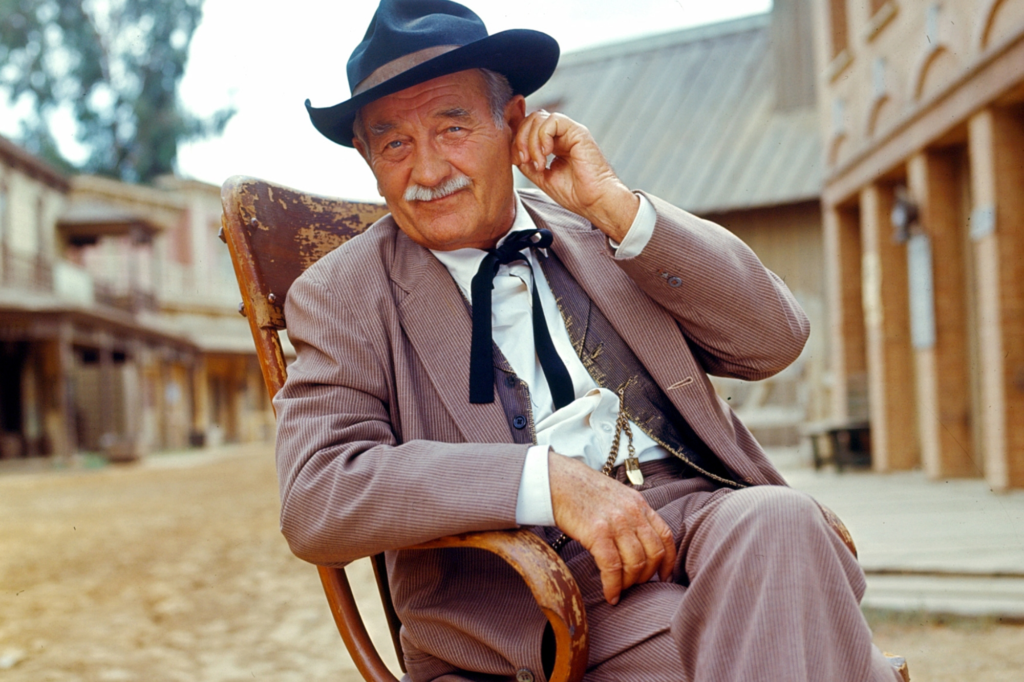
Salaries were far lower. Television in the 1950s and 1960s was a modest business compared to what it became. Even the leads on hit shows were not paid anything close to what network stars earn today, and supporting players earned considerably less than the leads. Stone was billed second to James Arness, and that billing was reflected in the cheque.
Residuals were weak and easy to sell. The residual system was new and its long-term value was not obvious. Actors were regularly offered lump sums to give up a future income stream that nobody could yet price properly. Many took the money.
Income was active, not passive. Stone earned when he worked. Once Gunsmoke was cancelled in 1975 he retired completely, at 71, and lived five more years on what he had saved. There was no second act, no producing deals, no brand licensing, none of the parallel income streams modern actors build.
So the fair comparison is not to a television star of today. It is to a well-paid professional of his own time who worked steadily for twenty years, saved carefully, and retired with a solid nest egg. By that standard he did well.
How his money compared to the rest of the Gunsmoke cast
Stone sat in the middle of the cast financially, and the reasons are structural rather than personal.
James Arness was the lead, carried the show as Marshal Matt Dillon, and was paid accordingly. He also stayed with the series for its entire run and had a working relationship with CBS that outlasted it, taking the character into a run of Gunsmoke television films in the years after 1975. That kind of continued involvement is worth a great deal, and Stone had none of it.
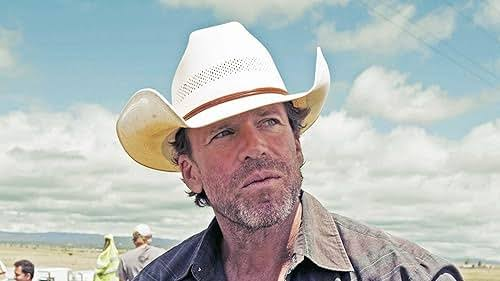
Amanda Blake, who played Miss Kitty for nineteen of the twenty seasons, made exactly the same residual decision Stone did in 1961 and took the same $100,000. Two of the show’s three longest-serving cast members, both signing away the same future income at the same moment, tells you this was standard practice rather than a personal misjudgement. CBS made the offer, and it looked like a good offer at the time.
Dennis Weaver saw the trap early. He played Chester Goode for nine seasons, worried he would never escape the character, and walked away in 1964 while the show was still a hit. He went on to lead McCloud through the 1970s and kept working until his death in 2006. Ken Curtis replaced him as Festus, stayed to the end, and carried on with Westerns into the 1990s.
Stone did neither. He committed to one role for twenty years and then stopped completely. That single difference, between an actor who kept earning and one who stopped at 71, explains more about the final figure than any gap in weekly pay ever could.
What Milburn Stone’s money bought him
A ranch in Rancho Santa Fe, a wealthy coastal community north of San Diego, and a quiet retirement on it.
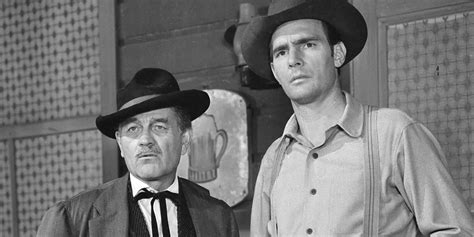
Stone moved there and stayed. When Gunsmoke ended he stepped away from acting entirely rather than looking for the next part, which was unusual for someone with his profile and a fair sign that he did not need the work. Southern California property was a good place for his money to sit in the 1960s and 1970s, though how much land he held is not documented.
His personal life was settled by the time the money arrived. He married Ellen Morrison in 1925 and they had a daughter, Shirley, before Ellen died in 1937. He married Jane Garrison in 1939, divorced her in 1940, then married her again in 1946. That second marriage lasted until his death. Jane outlived him by 22 years and died in 2002.
He died of a heart attack in La Jolla, California, on 12 June 1980, nine years after the bypass surgery that had briefly taken him off the show. He was 75, and was buried at El Camino Memorial Park in Sorrento Valley, San Diego.
Awards, honors, and what outlasted the money
Stone won the Emmy for Outstanding Performance by an Actor in a Supporting Role in a Drama in 1968 for his work on Gunsmoke. It was the only nomination of his career, and he won it, as recorded on the Television Academy’s record of his Emmy.
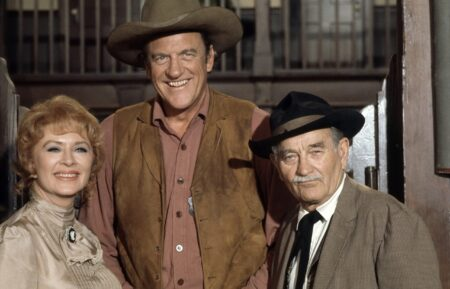
He also received a star on the Hollywood Walk of Fame on Hollywood Boulevard, and in 1975 St. Mary of the Plains College in Dodge City gave him an honorary doctorate, which made the man who played Doc an actual doctor of sorts. In 1981, the year after his death, he was inducted into the Western Performers Hall of Fame at the National Cowboy & Western Heritage Museum in Oklahoma City.
The honour with the longest reach is not an award at all, and it says something about where his money finally went. When Stone died he left a charitable gift to the arts in Cecil County, Maryland, and that bequest helped establish the Milburn Stone Theatre at Cecil College in North East. It opened in 1992 and now stages more than nine productions a season. His wife and daughter went on to become long-time benefactors of it.
That is the part of the estate that compounds. The $600,000 was taxed, spent, and inherited long ago. The theatre is still open, and the 604 episodes are still playing.
Frequently asked questions
What was Milburn Stone’s net worth when he died?
About $600,000 at his death in June 1980, which is roughly $2.4 million in today’s money. Other figures circulate because actors’ estates from that era were never publicly recorded, so every number is an estimate.
How much did Milburn Stone earn from Gunsmoke?
His exact salary was never published. Gunsmoke provided nearly all his income across twenty years and 604 episodes, but as a supporting player billed behind James Arness he earned well below what a lead on a hit show would command.
Did Milburn Stone get residuals from Gunsmoke reruns?
No, not after 1961. He sold his residual rights back to CBS that year for a one-off payment of $100,000. Amanda Blake, who played Miss Kitty, made the same deal for the same amount.
How many Gunsmoke episodes did Milburn Stone appear in?
He appeared in 604 episodes across the full 1955 to 1975 run. He missed only seven, in 1971, while recovering from heart bypass surgery, when Pat Hingle temporarily played a different doctor.
Did Milburn Stone win an Emmy?
Yes. He won Outstanding Performance by an Actor in a Supporting Role in a Drama in 1968 for Gunsmoke. It was the only Emmy nomination of his career, and he converted it.
Conclusion
Milburn Stone was worth roughly $600,000 when he died in 1980, about $2.4 million today. Nearly all of it came from twenty years of steady work on Gunsmoke rather than from any single big payday, and the 1961 sale of his residual rights to CBS for $100,000 is the reason the number is not much higher. Judged against his own era rather than against modern television salaries, he retired comfortably on a career built entirely on showing up and doing the job well.
Recommended Article:
Antonio Banderas Net Worth in 2026: The Full Breakdown
Joe Don Rooney Net Worth: What the Rascal Flatts Guitarist Is Worth in 2026
Kristina Rybalchenko Net Worth: What the Drummer Really Earns
Rosie Perez Net Worth: How Much the Do the Right Thing Star Is Worth in 2026
Elisabeth Shue Net Worth: How the Karate Kid Star Built a $20 Million Fortune