Lena Horne’s Net Worth: The Number, and How She Earned It
Lena Horne’s net worth was about $10 million when she died on May 9, 2010, at the age of 92. In today’s money that is roughly $15 million. She earned it across more than seven decades of singing, acting and headlining nightclubs, starting at $25 a week in the Cotton Club chorus line and rising to become the highest-paid Black entertainer in America. Here is where the money came from, what held it back, and what her family did with it afterwards
How much was Lena Horne worth when she died?
About $10 million, which works out to roughly $15 million in 2026 dollars.
That is an estimate rather than a filed number. Horne’s affairs were settled privately and no full accounting of the estate was published, so the exact total sits with her family.
The parts that can be checked point to a figure in that range. She owned five apartments in a single Upper East Side building, and the largest of them later sold for $2.2 million. Her furniture, art, jewelry and clothing brought $315,976 at one auction. Neither number captures cash, investments or royalties, and neither has ever appeared in a public court record.
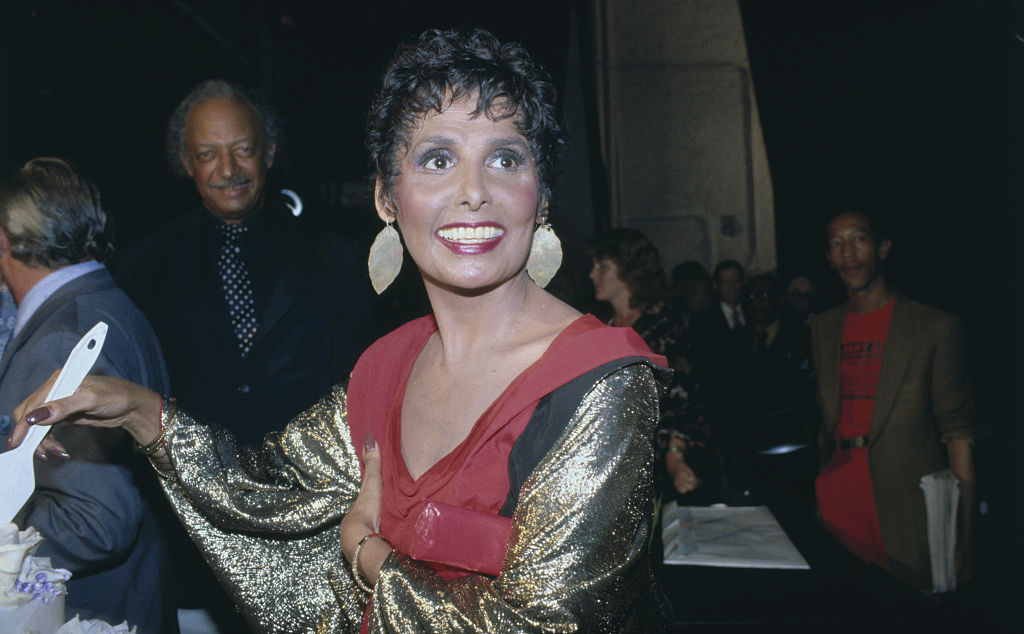
What is not in doubt is that she earned well for a very long time. Her working life ran from 1933 to the late 1990s, roughly sixty-five years of paid performance, and through much of the middle stretch she was the best-paid Black performer in the country.
Horne was comfortable rather than enormously rich. She earned like a top-tier live performer for fifty years, but she did it in an era of thin recording royalties, and she never owned the songs that made her famous.
How Lena Horne made her money
Live performance, more than anything else. Films made her a household name. Nightclubs, concert halls and Broadway paid for the apartments.
She started in the autumn of 1933, aged 16, in the chorus line at Harlem’s Cotton Club for $25 a week, doing three shows a night, seven nights a week. Her mother had pulled her out of Girls High School in Brooklyn to take the audition.
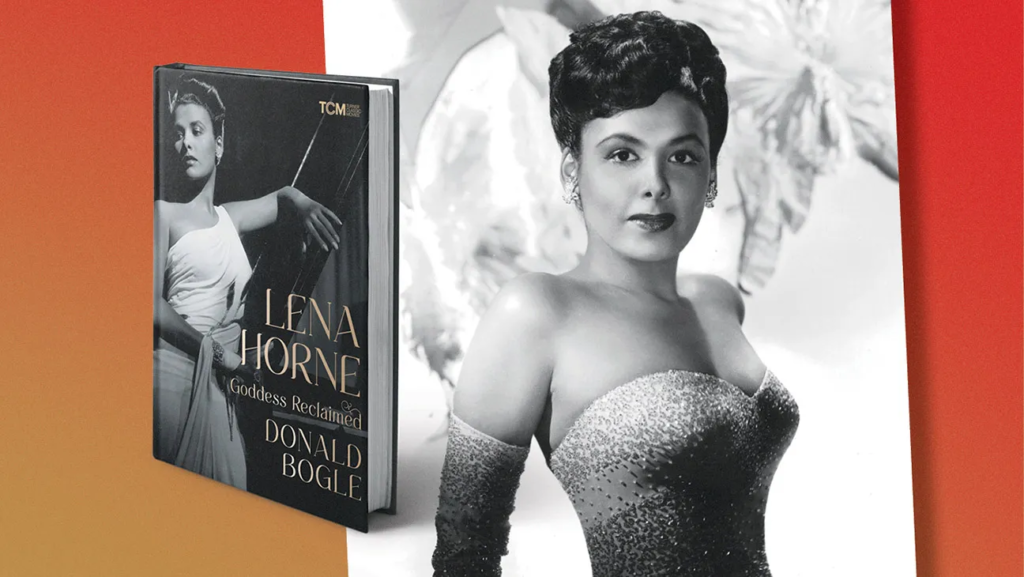
From there she sang with Noble Sissle’s orchestra, then toured with the Charlie Barnet band. Her first film, the 1938 musical The Duke Is Tops, ran out of money partway through the shoot, and the cast finished it without pay.
Then Hollywood called properly. In January 1942, MGM signed her to a seven-year contract, making her the first Black performer with a long-term deal at a major studio. She kept recording and kept headlining clubs the whole time, and that turned out to be the more profitable half of the business.
MGM loaned her out to 20th Century Fox in 1943 for Stormy Weather, and the title song became the number audiences asked for by name for the next fifty years. Credits like that one worked as advertising. They raised what a club or a hotel ballroom would pay to book her.
What she earned at her peak
By the middle of the 1940s she was the highest-paid Black entertainer in the United States, and most of that money did not come from the movies.
| Where the money came from | Rate in the mid-1940s |
|---|---|
| Nightclub engagements | $6,500 a week |
| Radio appearances | $1,500 each |
| MGM studio salary | $1,000 a week |
| Loew’s theater dates | $700 a week |
The gap tells the story. That $6,500 a week from clubs is worth roughly $120,000 a week today, and it was more than six times what the studio paid her.
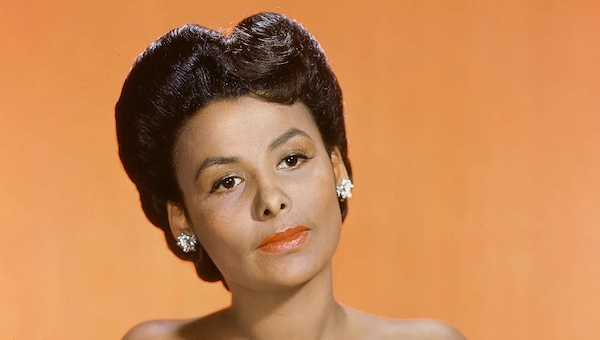
Her MGM deal started modestly. The first year paid $350 a week for 40 weeks, the second year $450, with $100 a week added annually after that. The contract also capped her weight at 122 pounds. It left her three months free each year to work nightclubs, and those three months were worth more than the other nine.
What the blacklist years cost her
Close to a decade of screen work. In the early 1950s her friendship with Paul Robeson and her own political activity got her listed in anti-Communist publications, and the studios stopped hiring her.
Her income shifted almost entirely to live shows and records, and both held up well. She signed a long-term deal with RCA Victor in 1956. Lena Horne at the Waldorf Astoria, taped on New Year’s Eve that year in the hotel’s Empire Room and released in February 1957, became the best-selling album by a woman in the label’s history.
In 1957 she opened on Broadway in Jamaica and became the first Black woman nominated for the Tony for Best Actress in a Musical. Club work carried her through the same stretch, with long runs at the Sands in Las Vegas, the Cocoanut Grove in Los Angeles and the Waldorf in New York.
The Broadway show that paid off at 63
Her single biggest earner arrived late. Horne announced her retirement in March 1980. A year later she opened a one-woman show instead.
Lena Horne: The Lady and Her Music began at the Nederlander Theatre on May 12, 1981, booked as a short engagement. It played 333 performances and closed on June 30, 1982, her 65th birthday, the longest run for a one-person show in Broadway history at that point. She was handed a special Tony within a month of opening, and the cast album, produced by Quincy Jones for his Qwest label, won two Grammys.
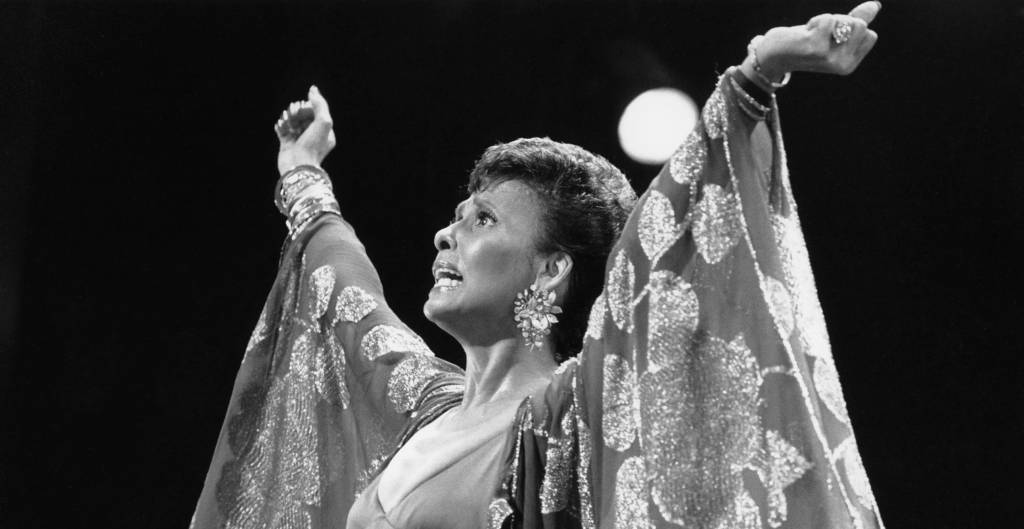
She then toured it across the United States and Canada and took it to London and Stockholm through 1984. That December she received the Kennedy Center Honors. She was buying Manhattan property around the same time, which turned out to be the asset that lasted longest.
She kept earning into her late seventies. The Recording Academy handed her a Lifetime Achievement Award in 1989, and she went back into the studio for Blue Note, cutting We’ll Be Together Again in 1994 and turning up on Frank Sinatra’s Duets II the same year. A live set taped that September, An Evening with Lena Horne, won her another Grammy.
Why she did not build a bigger fortune
Three things kept the total down.
She was a singer, not a songwriter. Stormy Weather was written by Harold Arlen and Ted Koehler in 1933 for a Cotton Club revue, and Ethel Waters sang it first. Performers earn fees and modest royalties. The people who write the songs hold the copyright and collect for decades. Horne’s signature material belonged to other people.
Segregation cut her film work into removable pieces. Most of her MGM appearances were standalone musical numbers with no link to the plot, built that way so theaters in the South could snip them out without breaking the story. That kept her off the poster and out of the pay bracket her fame should have bought.
And live income stops when you stop. Her last album of new material came out in the late 1990s, and she withdrew from public life around 2000. For the final decade of her life she was living on savings and property rather than fresh earnings.
What happened to her money and her belongings
Her estate passed to her daughter, the author Gail Lumet Buckley, who served as trustee, and to her six grandchildren. Buckley died in July 2024.
The most public moment came on February 23, 2011, when Doyle in New York sold about 200 lots from her Upper East Side apartment. Every lot found a buyer, and the sale made $315,976 against a high estimate of $155,000. A small Louis Vuitton trunk stenciled Lena Horne Hayton, estimated at $500 to $700, went for $20,000. A monogrammed leather vanity case estimated at $400 fetched $6,250.
The apartments moved more slowly. Horne had bought five units at the Volney, a converted hotel at 23 East 74th Street, and used them as home, office, guest rooms and storage. The 900-square-foot office sold in 2018 for $825,000. Her two-bedroom home, 2,100 square feet, sold in February 2023 for $2.2 million.
Her name still carries value she never collected on. On November 1, 2022, Broadway’s Brooks Atkinson Theatre became the Lena Horne Theatre, the first Broadway house named for a Black woman. The bandshell in Brooklyn’s Prospect Park carries her name too, and a prize set up in her honor in 2019 sends $100,000 to a charity chosen by each winner.
Frequently asked questions
Was Lena Horne a millionaire?
Yes. She was worth roughly $10 million at her death in 2010, about $15 million in today’s money, and she had been earning at the top of her profession since the 1940s.
Who inherited Lena Horne’s money?
Her daughter Gail Lumet Buckley, who acted as trustee of the estate, and her six grandchildren. Buckley oversaw the 2011 auction and the apartment sales before her own death in July 2024.
How much did Lena Horne earn at MGM?
Her 1942 contract started at $350 a week for 40 weeks and rose by $100 a week each year. By the mid-1940s she was on about $1,000 a week, though nightclubs paid her more than six times that.
Did Lena Horne own Stormy Weather?
No. Harold Arlen and Ted Koehler wrote it in 1933 and Ethel Waters sang it first. Horne made it her signature song but never held the copyright, so it earned her no writing royalties.
How much did Lena Horne’s belongings sell for?
$315,976. Doyle in New York auctioned about 200 lots from her apartment in February 2011, and every one sold, more than doubling the high estimate of $155,000.
Conclusion
Lena Horne died worth roughly $10 million, about $15 million in today’s money, built almost entirely on live performance across seven decades rather than on film salaries or song royalties. The figure is an estimate, since the estate was never made public, but the traceable pieces fit it: a few million in Manhattan property, and a household’s worth of art, jewelry and clothing that sold for $315,976 in a single afternoon.
Recommended Articles:
Peter Cullen’s Net Worth in 2026: What the Voice of Optimus Prime Is Really Worth
Park Seo joon Net Worth: How Much Is He Worth in 2026?
Laura Caldwell Net Worth: What the Numbers Actually Show
John Travolta Net Worth: How He Built a $250 Million Fortune
Who Is Julianna Margulies? The Actress Behind ER and The Good Wife