
John Landis Net Worth: How Much the Animal House Director Is Really Worth
John Landis has an estimated net worth of about $150 million. He built that fortune over more than 50 years as a film director, writer, producer, and occasional actor, with a run of hit comedies in the late 1970s and 1980s doing most of the heavy lifting.
The number is an estimate, not a figure Landis has confirmed. Like most Hollywood wealth, the exact total is private. What we can pin down is where the money came from, and on that front the trail is clear: some of the most profitable films of their era, one of the most famous music videos ever made, and decades of residual income that still pays out today.
What is John Landis’s net worth?
John Landis is worth an estimated $150 million. His films have earned close to $2 billion at the worldwide box office across his career, and several of them made their money back many times over.

That gap between a film’s budget and its box office is the key to understanding his wealth. A director who works on huge hits made cheaply tends to hold strong negotiating power on the next project, and often a slice of the profits. Landis had several of those early in his run, and the residual payments from them have kept flowing for 40 years and more.
Bottom line: an estimated $150 million net worth, powered by a small number of very profitable films and a music video that changed the format forever.
Who is John Landis?
John David Landis was born on August 3, 1950, in Chicago, Illinois. His family moved to Los Angeles when he was four months old, and a childhood viewing of the fantasy film The 7th Voyage of Sinbad set him on the path to directing. He has said the film transported him so completely that he sat through it twice, then went home and asked his mother who makes movies.
He did not take the school route. Landis dropped out of high school and started at the bottom, working as a mailboy at 20th Century Fox. In 1969 he traveled to Yugoslavia to work on the MGM war film Kelly’s Heroes, stepping up to assistant director after the original one fell ill. He spent the next few years in Europe as a go-fer, stunt double, and dialogue coach on various productions.
His directing debut came in the early 1970s with Schlock, a low-budget monster spoof he wrote, directed, and starred in at age 21. It flopped, and offers dried up for a while. The turnaround came in 1977 with The Kentucky Fried Movie, followed by the film that made his name.
How did John Landis build his fortune?
Landis built his wealth through four main streams: directing fees on hit films, a share of the profits on the biggest ones, ongoing residuals from decades of reruns and streaming, and property. The films came first, and they came fast.

The Animal House breakthrough
In 1978, Landis directed National Lampoon’s Animal House for Universal. Made for roughly $3 million, it grossed $141.6 million at the box office, which works out to more than $600 million in today’s money. It remains one of the most profitable films ever made, and it made a star of John Belushi. It also gave Landis the leverage that shaped the rest of his career.
The film was later added to the Library of Congress National Film Registry in 2001, a recognition reserved for films judged culturally or historically significant. That kind of lasting status matters financially too, because a film people keep watching is a film that keeps paying residuals.
The scale of that first hit set a pattern. Landis learned early that a modestly budgeted film with the right cast and tone could out-earn far more expensive productions many times over. That lesson shaped the deals he could command next, and it is the single biggest reason his early work matters so much to his wealth today.
The 1980s hot streak
The decade that followed was Landis at his commercial peak. In 1980 he directed The Blues Brothers with Belushi and Dan Aykroyd, a big, expensive film famous for staging one of the largest car pileups in cinema history. In 1981 came An American Werewolf in London, a horror project he had been planning since 1969, which won the first ever Academy Award for Best Makeup.
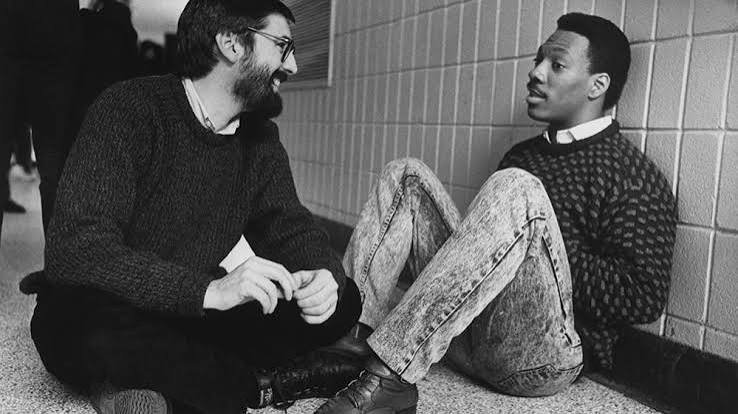
Then two Eddie Murphy hits. Trading Places (1983) and Coming to America (1988) were both large earners, and Coming to America in particular became one of the highest-grossing comedies of the decade. Between them, plus Three Amigos (1986), Landis directed a stretch of films that kept him in demand and kept the residual checks growing.
It is worth pausing on how unusual that run was. Directing one film that grosses well is luck as much as skill. Directing five or six across a single decade, in two different genres, is a career. Each hit raised his fee on the next project and strengthened his position when it came to negotiating a share of the profits. By the end of the 1980s, Landis had assembled a library of films that would keep earning long after the cameras stopped rolling.
The decade also produced Twilight Zone: The Movie (1983), a project marked by a tragic on-set accident during filming of Landis’s segment that killed actor Vic Morrow and two child performers. Landis was charged with involuntary manslaughter and acquitted in 1987. The event reshaped safety rules across the industry, and it remains a defining and difficult chapter in his story, separate from the commercial success around it.
His box office track record
The scale of the early hits explains why the net worth estimate lands where it does. Here are the films that did the most for his finances, with the numbers that made them matter.

| Film | Year | Why it mattered financially |
|---|---|---|
| National Lampoon’s Animal House | 1978 | ~$141.6M box office on a ~$3M budget; a top all-time profit ratio |
| The Blues Brothers | 1980 | Global hit that became a lasting franchise and cult favorite |
| An American Werewolf in London | 1981 | Won the first Best Makeup Oscar; steady catalog earner |
| Trading Places | 1983 | Major Eddie Murphy hit; still widely watched every holiday season |
| Coming to America | 1988 | One of the decade’s biggest comedies; spawned a 2021 sequel |
Add up a career of films like these and the totals climb toward the $2 billion mark in worldwide ticket sales, the kind of running totals tracked on databases like Box Office Mojo. A director does not keep anything close to that, but the fees and back-end deals on hits of this size are substantial, and they compound over time.
It helps to see why the ratio matters more than the raw gross. A film that earns $141 million on a $3 million budget returns roughly 47 times its cost, and that kind of return is what earns a director real leverage. A film that earns $141 million on a $100 million budget barely breaks even after marketing. Landis’s early hits sat firmly in the first camp, which is why they did so much for both his reputation and his bank balance.
The Thriller video and music work
Landis did not just make films. In 1983 he directed Michael Jackson’s Thriller, the 14-minute music video that reset what the format could be. It remains the only music video preserved in the National Film Registry, added in 2009. He later directed Jackson’s Black or White video in 1991, along with videos for other artists.
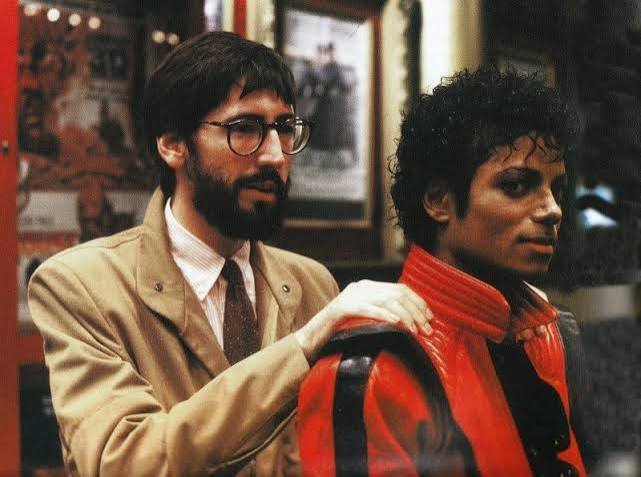
The cultural weight of Thriller is hard to overstate, and it produced a memorable financial footnote. The red leather jacket Jackson wore, designed by Landis’s wife Deborah Nadoolman, sold at auction in 2011 for $1.8 million. That sale went to the designer’s side of the story, but it shows the enduring value attached to that single project.
John Landis’s house and real estate
Property is the part of a Hollywood net worth that is easiest to verify, because purchases leave a public record. Landis and his family live in the hills of Beverly Hills, California, and their home has real history attached to it.
In 1999, Landis paid $2.3 million for a 3,698 square foot home in the Beverly Hills area, a four-bedroom, four-bathroom property. The family has long been associated with the former estate of screen legend Rock Hudson in Beverly Crest. Los Angeles real estate in that part of the city has appreciated sharply over the past two decades, so the current value of any long-held property there sits well above its original price.
Real estate is often the most stable slice of a director’s wealth. A home bought in Beverly Hills in the late 1990s has likely multiplied in value several times over.
Salary, residuals, and steady income
A director’s pay comes in two forms: the fee for making the film, and the residuals that follow for years afterward. For a filmmaker with Landis’s catalog, the second part is the gift that keeps giving.

Residuals are payments made to the people who made a film or show each time it airs, streams, or sells in a new format. Every time Trading Places runs on television at the holidays, every time Coming to America lands on a new streaming service, and every disc or download of Animal House generates a payment that flows back to the people with a stake in it. Across a catalog this deep, those small amounts add up to a meaningful yearly income.
This is the quiet engine behind a lot of Hollywood wealth. A director does not need a new blockbuster every year if the old ones keep selling. Streaming has arguably strengthened that effect, because a film that once earned from television airings and disc sales now also earns from being licensed to platforms around the world. Landis’s biggest titles are exactly the kind of familiar, rewatchable films that streaming services want in their libraries.
Landis has kept working steadily, if more quietly, in recent decades. He moved into television and documentary work through the 2000s, directed episodes of horror anthology series, and returned to features with the 2010 film Burke and Hare. Since 2021 he has executive produced and directed episodes of an animated series. The point is not that these recent projects made him rich. It is that the back catalog does the earning, and it never really stops.
How the $150 million estimate is put together
Net worth figures for public figures are built by estimating income across a career and subtracting a rough sense of spending, taxes, and lifestyle. Income is the easier half to gauge, because box office numbers, known deals, and property records are public. Spending is private, which is why the total is always an estimate rather than a precise figure.
For Landis, the estimate rests on solid ground on the income side: a run of highly profitable films, a share in some of them, four decades of residuals, and appreciating property in one of the most expensive zip codes in America. Put those together and a nine-figure estimate is reasonable. The $150 million number is the one most commonly attached to his name, and it fits the shape of his career.
You will see other figures floating around, and that is normal for celebrity net worth. Some estimates run lower, in the tens of millions, often because they date from earlier in his career or weigh his quieter recent output more heavily. The higher $150 million estimate reflects the full picture: the cumulative value of a catalog of hits, the leverage those hits created, and decades of compounding property and residual income. When the underlying facts are the same, the difference usually comes down to how much weight each estimate gives to the back catalog versus recent work.
His family and personal life
Landis married costume designer Deborah Nadoolman on July 27, 1980. She designed costumes for several of his films and for the Thriller video, and she went on to a distinguished career of her own. The couple have two children, daughter Rachel and son Max Landis, who followed his parents into filmmaking as a screenwriter.

The family has stayed in Beverly Hills for decades, and Landis has kept a relatively private profile away from the red carpet. His wealth reflects a working filmmaker’s life rather than a flashy one: it was earned across a long career and has been quietly held through property and residual income rather than spent on spectacle.
Frequently asked questions
How much is John Landis worth?
John Landis has an estimated net worth of about $150 million. It comes from directing hit films, a share of profits on the biggest ones, decades of residual income, and Beverly Hills real estate. The figure is an estimate, not a confirmed total.
What is John Landis’s most profitable film?
Animal House (1978) is his most profitable by ratio. Made for around $3 million, it grossed $141.6 million, more than $600 million adjusted for inflation. It remains one of the most profitable films ever made.
Did John Landis direct the Thriller music video?
Yes. Landis directed Michael Jackson’s Thriller in 1983, the 14-minute video that reshaped the format. It is the only music video in the Library of Congress National Film Registry, added in 2009. He also directed Jackson’s Black or White.
Where does John Landis live?
Landis lives in the hills of Beverly Hills, California. In 1999 he paid $2.3 million for a 3,698 square foot, four-bedroom home there. The family has long been linked to the former estate of actor Rock Hudson in Beverly Crest.
Is John Landis still working?
Yes, though more quietly than in his peak years. Since 2021 he has executive produced and directed episodes of an animated series, after earlier television, documentary, and feature work. His older catalog still generates the bulk of his income through residuals.
Conclusion
John Landis is worth an estimated $150 million, earned over five decades of directing. The bulk of it traces back to a short run of hugely profitable films in the late 1970s and 1980s, from Animal House to Coming to America, plus the Thriller video and years of residual income that still pays out. Treat the figure as a well-grounded estimate rather than a confirmed number, and the real takeaway is how a small number of the right hits can fund a lifetime.